


Smithies
You are in an area known as “Smithies” which lies about two miles northeast of Barnsley town centre. This area was known for its paper, corn and woollen mills. Between 1856 and 1929, several collieries operated near to this area which included Wharncliffe Carlton Colliery, Wallsend Main Colliery, East Gawber Hall Colliery, and Central Silkstone Colliery.
Historically, Smithies was a village in the township of Monk Bretton within the parish of Royston and on the border with Carlton. Monk Bretton became a separate civil parish in 1866 and was later absorbed into the County Borough of Barnsley in 1921. When the county borough was abolished in 1974, Smithies became part of the Metropolitan Borough of Barnsley.
What were smithies?
Smithies originally were forges or ironworks where workers used heat and hammer to work on metal, often iron or steel.
Smithies Lane Depot
You may be familiar with Smithies Lane depot which functions as an important operational key site for Barnsley Council. The depot is mainly used for highways maintenance and refuse collection. In 2025, the Council announced an investment of over £2 million to modernise the depot, with the aim of maintaining operational efficiency and safeguarding staff welfare (part of the Be Safe Work Safe campaign).
-
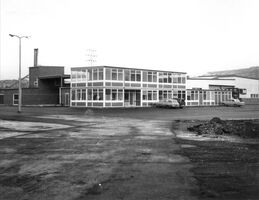
Smithes Lane depot, 1960s (c) Barnsley Archives and Local Studies -
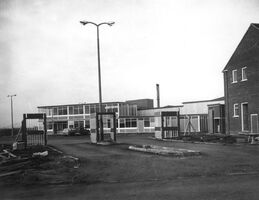
Smithes Lane depot, 1960s (c) Barnsley Archives and Local Studies
Read on further to learn about the early industries in this area.
Early Industry at Smithies
The information below is based on research from ‘Water Mills and Furnaces on the Yorkshire Dearne and its Tributaries’ by Tom Umpleby, published by Wakefield Historical Publications, 2000.
The author has identified three different mills or furnaces at Smithies that fall within his criteria of being powered by the water of the River Dearne, all of ancient origin.
Indeed, it appears that the ironworks, or smithies, themselves were the origin of the name of the district.
The district was owned in the Middle Ages by Monk Bretton Priory and therefore passed into the possession of the Crown at the Dissolution of the Monasteries. In 1579, the locally significant Wood family leased the Smithies area from the Crown and purchased it in 1625.
“The family of Wood, the present head of which is Lord Halifax, is one which, in former times, was largely connected with Monk Bretton, Barnsley, and the district. Its ancestors were living at Monk Bretton, or Burton, as the village was then more generally called, in the middle of the sixteenth century (and probably long before), and were of considerable account. George Wood, of Burton, who was buried at Roystone in 1589, had a lease of Smithies from the Crown, 11th April 1579, which was renewed 21st May 1585.”
Extract from ‘Worthies, Families and Celebrities of Barnsley and the District’ by Joseph Wilkinson, published London: Bemrose & Sons (1883), page 1.
According to Tom Umpleby’s book, the earliest industrial site was the water-powered ironworks, which he suggests dates to the middle of the 12th century. This was followed by a corn mill in the late 13th century, slightly upstream of the ironworks.

The Ordnance Survey map published in 1855 clearly shows that the corn mill was powered by water diverted from the river down a long head race (artificial channel), through the mill itself in two channels (suggesting two separate water wheels), then down a shorter tail race channel to rejoin the river.
The third water-powered mill in the district was a fulling mill, used for the processing of wool. The suggested date for this mill is the mid fourteenth century, followed by a change of use in about 1650 to a paper mill.
Gradually the three water-powered mills fell out of use: the last written reference to the ironworks is a rent receipt dated 1636; and the last recorded reference to a papermaker at Smithies is from a parish register entry of 1768.
The corn mill was converted into a paper mill in about 1870, and by 1880 its power source had been changed from water to steam. The Ordnance Survey map published in 1892 shows the site of the original mill covered by much larger premises, on both the north and south sides of Smithies Lane, all now under the name ‘Valley Paper Works’.

The Valley Paper Works is one of a large number of paper works (also including the Dearne Paper Works at Old Mill, Barnsley) listed under the name of Charles Marsden & Sons Ltd in “Phillips’ Paper Trade Directory of the World”, 1923.
Smithies Wesleyan Reform Union Chapel
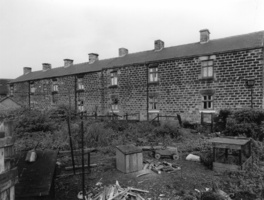
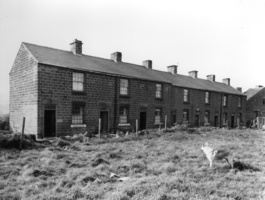
The first Wesleyan Reform chapel / Sunday School was built in 1859 in the district known as Smithy Green. It is marked as ‘Sunday School’ on the north side of Smithy Green Road as shown on the 1892 and 1906 editions of Ordnance Survey maps.

The booklet ‘The Methodist New Connexion Barnsley Circuit’, published in 1907, referring to the period around 1860, states that “Smithies chapel was used alternate Sundays by the Methodist New Connexion and the Wesleyan Reform denominations, and eventually passed to the W.R.”
The whole of the area once known as Smithy Green is now occupied by the Smithies Lane Household Waste Recycling Centre.
The Smithy Green chapel was replaced by a new chapel on Wakefield Road which opened in February 1912.
-
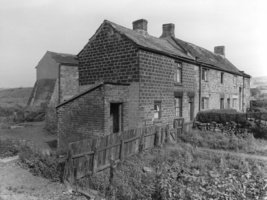
Smithy Green Road, 1958 (c) Barnsley Archives and Local Studies -
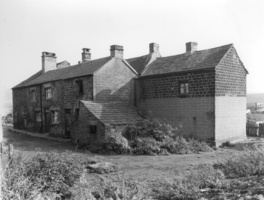
-
-
-
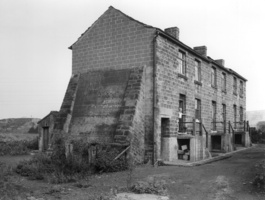
Flooding at Smithies, 1970
This photograph was taken from a spot immediately to the right of the eastern most corner of the reservoir, with Smithies Lane going off to the left and the last three remaining houses of Short Row in the centre. The house in the distance with the tall chimney is Railway Cottage which still stands today.
Short Row originally consisted of eight cottages. In the early 20th century, the three at the eastern end of the row were turned into a Working Men’s Club called the ‘Smithies Club’.
Further information on the club can be found in the following blog: https://barnsleyhistorian.blogspot.com/2021/04/finding-smithies-working-mens-club.html
